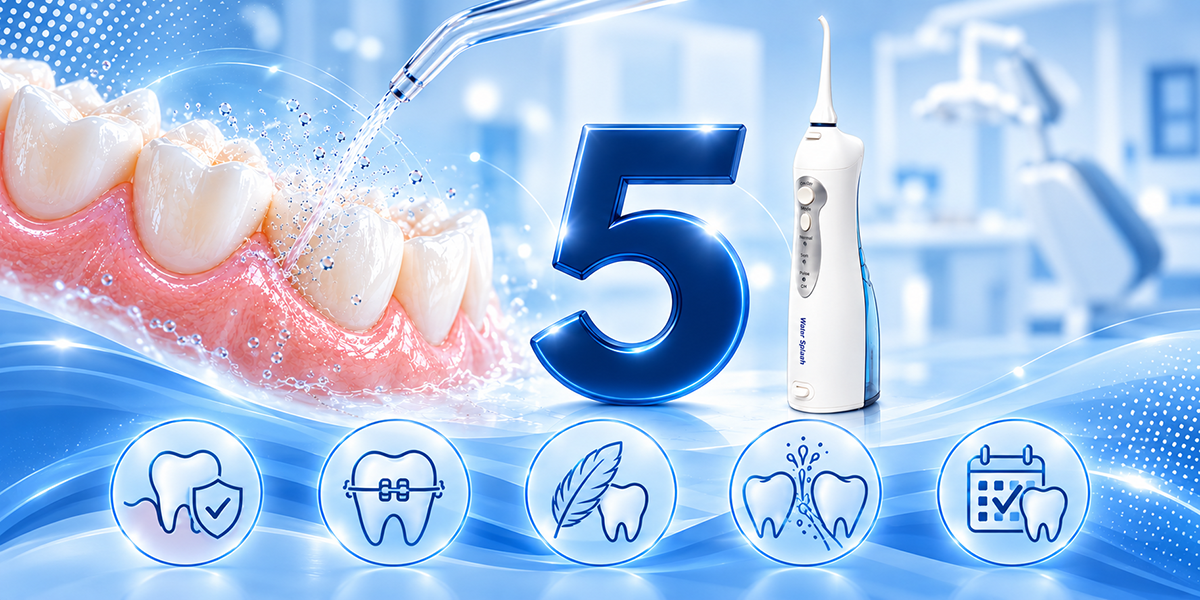
What Is a Water Flosser, and Why Does It Matter?
When we think about oral hygiene, the first things that come to mind are a toothbrush and toothpaste—and perhaps dental floss. But are they really enough? Can these tools remove all the tiny food particles and bacteria hiding beneath the gums and between the teeth?
In recent years, a clever and highly effective tool has become increasingly popular among dentists and people who care about their oral health: the water flosser, also known as an oral irrigator.
You have probably heard the name Waterpik. It is actually a well-known brand of water flossers—much like Tide, a brand so familiar in some places that people use its name to refer to laundry detergent in general.
Similarly, people sometimes say “Waterpik” when they mean “water flosser”. But remember: Waterpik is a brand, just like Oral-B or Water Splash.
What Is a Water Flosser?
A water flosser is an electric oral hygiene device that directs a controlled, pulsating stream of water towards the teeth and gums.
Unlike traditional floss, which works by passing a strand between the teeth, a water flosser uses water pressure to flush out food particles, plaque and bacteria from areas that toothbrushes and floss cannot reach.
The device typically consists of three main parts:
• A reservoir for water or mouthwash
• A motor to generate pressure
• A nozzle or tip to direct the water
How Does a Water Flosser Work?
Using precise pulses of water, a water flosser:
• Flushes food particles, plaque and bacteria from between the teeth and below the gumline
• Massages the gums and helps improve blood circulation
• Cleans deeper areas that conventional dental floss cannot reach
Important: The primary purpose of a water flosser is not to prevent tooth decay—that is the role of brushing with fluoride toothpaste. Its main focus is maintaining gum health and preventing gum disease.
Key Benefits of Using a Water Flosser
According to scientific research and dentists’ experience, the main benefits of water flossing include:
1. Improved Gum Health
Studies have shown that water flossing can reduce gum bleeding and inflammation more effectively than string floss.
Water can reach below the gumline and into periodontal pockets—areas that dental floss often cannot access.
2. Ideal for People with Specific Dental Needs
A water flosser is an excellent option for people who:
• Have braces or other fixed orthodontic appliances
• Have implants, bridges or crowns
• Wear a permanent retainer behind their teeth
• Have recently undergone scaling and root planing (SRP) or have a history of gum disease
In these situations, conventional floss is often not sufficiently effective, while a water flosser can easily clean around these appliances and restorations.
3. Gentle and Comfortable for Sensitive Gums
If your gums are sensitive to flossing or bleed when you floss, a water flosser can be a suitable alternative. Its gentle, continuous massaging action helps improve gum health over time.
4. Deeper Cleaning
While dental floss cleans a maximum of 1–3 mm below the gumline, a water flosser can reach 4 mm or more, flushing debris from deeper pockets—a particularly important feature for people with periodontitis.
5. Building an Enjoyable, Positive Habit
Many users find that, after using a water flosser for a while, they do not want to go without it!
The fresh, clean feeling after use is so satisfying that water flossing becomes a lasting habit.
As one dental hygienist puts it:
“The best addiction I can give my patients is an addiction to water flossing!”
What Does a Water Flosser Not Replace?
It is important to understand that a water flosser does not replace brushing or string flossing.
It should be used as a complementary tool in your oral hygiene routine, rather than as a replacement for the essentials.
If You Care About Your Gum Health…
Water flossing is one of the most effective ways to care for your gums, especially if you have braces, dental implants or a history of gum disease.
It not only cleans hard-to-reach areas but also makes everyday oral care more enjoyable.
Combine water flossing with regular brushing and routine dental visits to keep your smile healthy and bright.
Benefits at a Glance: Why Use a Water Flosser?
• Deep cleaning below the gumline
• Reduced gum inflammation and bleeding
• Suitable for specific dental needs, including braces, implants and bridges
• Comfortable and gentle, even on sensitive gums
• A cleaner, fresher-feeling mouth