Water Flossers: A Modern Approach to Oral Health and Hygiene
As the entry point for food, the mouth plays an important role in overall health. Poor oral hygiene and oral infections can contribute to various diseases and pose particular risks for people with heart disease, immune deficiencies or diabetes. Research has shown that incorrect brushing and flossing techniques, along with unsuitable products, may not only fail to clean all tooth surfaces but also damage the tissues that support the teeth. Maintaining good oral hygiene is the most important step in preventing common dental conditions, including tooth decay and gum disease. Water flossing offers the best and easiest way to maintain oral health, potentially improving wellbeing while reducing treatment costs. After all, prevention is better than cure.
What Is a Water Flosser?
The first professional oral irrigation device was introduced in 1962 by a dentist named Colorado, who worked with a hydraulic engineer to improve his patients’ oral hygiene. Today, this device is known as a water flosser.
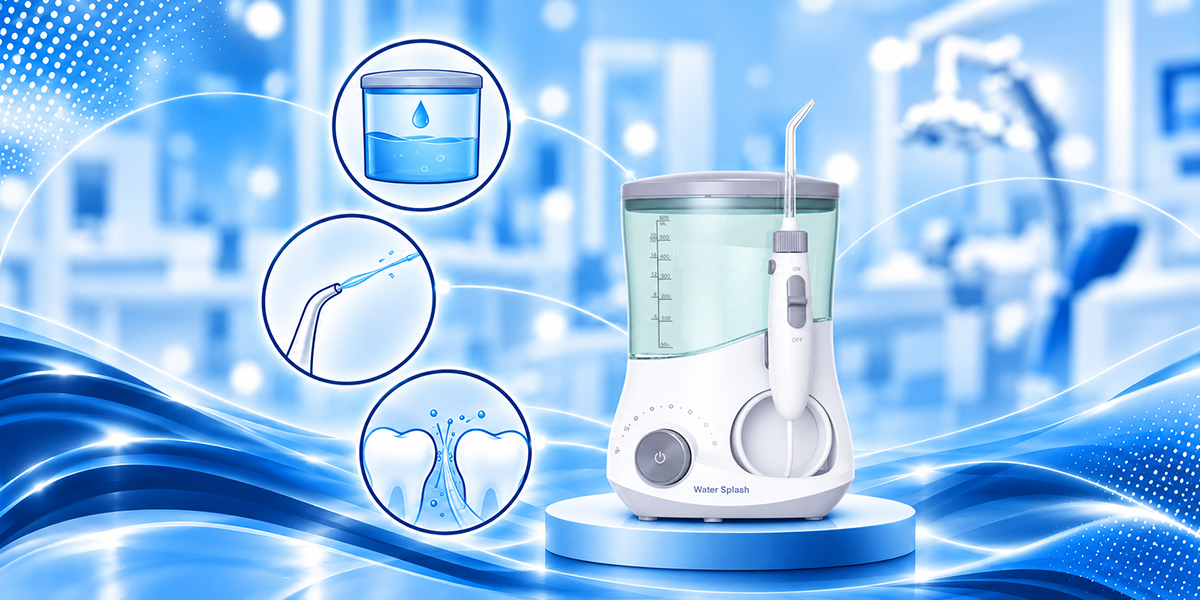
A water flosser is an electric or battery-powered device that directs pressurised water through a nozzle to clean between the teeth and along the gums, removing tartar, germs and trapped food particles. One of its distinctive features is its ability to flush bacteria from deep within the gums using water pressure—a feature not found in other oral cleaning tools.
Types of Water Flossers
Water flossers are available in two main types: rechargeable portable models and mains-powered models.
Rechargeable Portable Models
These cordless models offer flexibility and convenience, making the cleaning process quicker. Rechargeable portable models can be used in a variety of settings and are particularly convenient for working individuals and frequent travellers. Their lightweight, cordless design also takes up little space.
Mains-Powered Models
These models have been used for many years and operate through a connection to mains electricity. They feature separate, high-capacity water reservoirs, reducing the need for frequent refilling. They are popular and offer a long service life.
These devices allow users to adjust the water pressure and may include a variety of attachments, such as toothbrush, orthodontic, implant, classic jet and periodontal pocket tips.
Types of Water Flosser Tips
Different tips contribute to the effectiveness and performance of water flossers. The available attachments vary depending on the user’s needs and the device model.
Classic Jet Tip: Designed for everyday use, this tip cleans between teeth and below the gumline to help prevent gum disease. Start at the back teeth and follow the gumline, pausing briefly between teeth. Direct the tip towards the gumline at a 90-degree angle. Keep it slightly away from the gums so the water stream can remove plaque and small food particles.
Orthodontic Tip: This tip features a tapered brush that helps remove plaque from braces and orthodontic appliances. Gently guide it along the gumline, pausing briefly to brush between teeth and around brackets or orthodontic appliances before moving to the next tooth.
Periodontal Pocket Tip: This tip is used for tartar removal. Set the pressure to its lowest level. Place the soft tip against the tooth at a 45-degree angle and gently position it below the gumline, inside the periodontal pocket. Lower water-pressure settings are recommended when using this attachment.
Tongue Cleaner Tip: This spoon-shaped attachment removes bacteria from the tongue and helps prevent bad breath. Set the pressure to its lowest level. Place the cleaner in the centre of your tongue, approximately halfway towards the back. Switch on the device and gently draw the tip forwards. You can increase the water pressure if desired.
Toothbrush Tip: This attachment features a stationary brush with water flowing through its centre. It can be used with a manual brushing motion.
Why Is Water Flossing Recommended?
A suitable daily routine is essential for keeping teeth clean. Bacterial plaque forms on teeth every day, so removing as much of it as possible is important. Brushing twice a day for two minutes takes care of 60% of tooth surfaces, but cleaning between teeth is also essential.
Although most dentists recommend flossing, statistics indicate that many people do not floss sufficiently because of busy schedules or neglect. This can contribute to oral health problems such as tooth decay, gum inflammation and gum recession.
Can Everyone Use a Water Flosser?
Water flossers can help supplement oral hygiene for everyone. However, they are not recommended for children. Brushing once a day is sufficient for children’s oral hygiene. If a child has braces or gum disease, consult a dentist before purchasing a water flosser.
If you have recently undergone surgery or experience pain, discomfort or unusual bleeding while using a water flosser, stop using it.
Water Flossing Is Particularly Recommended and Considered Essential for Certain Groups
- Healthy individuals seeking to prevent oral disease
- People with dental implants, crowns or orthodontic appliances
- People experiencing bad breath
- People with periodontal pockets
- People prone to gum disease
- People with heart disease or diabetes
- Pregnant women
- Smokers
Benefits of Water Flossing
- Water flossers are easy to use and harmless.
- They provide thorough cleaning of the teeth and gums with minimal time and effort.
- Adding water flossing to your routine removes the need for excessive string flossing.
- According to clinical research, water flossers remove up to 99.9% of bacterial plaque from between the teeth and gums.
- There is no better alternative for cleaning around orthodontic wires and brackets.
- They are a reliable and effective way to maintain hygiene and reduce bacteria around implants.
- Consistent daily use reduces gum inflammation and bleeding, potentially reducing periodontal and gum infections.
- They are highly effective in reducing periodontal disease and supporting patients with diabetes.
- Water flossers help users reach the back teeth, often considered the mouth’s hard-to-reach areas, minimising the risk of tooth decay.
- High-pressure water removes bacteria and leaves the mouth feeling clean and fresh.
Disadvantages of Water Flossers
Despite their benefits, water flossers also have some drawbacks. The main limitation is cost, as purchasing and maintaining a device may not be affordable for everyone. Incorrect use and poor maintenance hygiene may also damage parts of the teeth and shorten the device’s service life.
How to Use a Water Flosser
- Make sure rechargeable models are charged and mains-powered models are properly connected to the electricity supply.
- Fill the reservoir to its indicated capacity.
- Insert the selected tip into its designated position.
- Adjust the water pressure or operating mode according to your gums’ comfort level.
- Do not switch on the device until the tip is inside your mouth.
- Keep your lips slightly closed to prevent splashing, but sufficiently open to allow the tip to move freely.
- Lean over the sink before starting to prevent water from splashing around.
- Position the tip between the teeth at a 90-degree angle to the tooth’s long axis.
- Start at the back teeth and work towards the front.
- Clean both the outer and inner surfaces of the teeth.
- Pause for three seconds between the teeth being cleaned.
- Switch off the device before removing it from your mouth.
After-Use Care and Maintenance
- Open the reservoir lid and empty the remaining water.
- Switch on the device to expel any water remaining inside it.
- Clean underneath the reservoir every two weeks to maintain hygiene.
- If the device will not be used for an extended period, make sure the reservoir is empty and dry. Leaving water in the reservoir and internal components encourages microbial and bacterial growth, which may make the device unsuitable for future use.
- If you use mouthwash, refill the reservoir with water afterwards and run the device for 30 seconds to flush any remaining mouthwash from the internal components. Then empty the reservoir. This helps prevent mouthwash residue from building up.
- Store the device in a cool, dry place.
- Never use the device while bathing or showering.
- Do not place the device where it could fall, particularly into water.
- To help extend the device’s lifespan, use filtered water or water that has been boiled in a samovar.
- Do not use vinegar or substances containing lime to descale the device.
Water Flosser Prices
Factors affecting the price of a water flosser include quality, motor power, reservoir capacity, adjustable water pressure, the number of tips, power source, battery performance, rotational speed and warranty coverage. The manufacturer’s brand also influences the price.
What Should You Consider When Buying a Water Flosser?
The wide variety of water flossers available, with different features and designs, can make choosing one confusing. The following key points can help you make a more informed decision.
- Water pressure: This refers to the pressure of the water leaving the nozzle, measured in psi. Water flosser pressure settings range from 10 to 150 psi.
- Water pulse rate: The number of water pulses delivered per minute contributes to cleaning effectiveness. These devices direct water towards the nozzle in pulses rather than as a continuous stream.
- Adjustable power control: Being able to adjust the device’s power for different cleaning needs is an important feature that helps prevent damage to the teeth.
- Number of tips: Different attachments are available for cleaning plaque, orthodontic wires, veneers and other dental surfaces or appliances. The types and number of included tips affect the price.
- Water reservoir: Sufficient capacity allows you to finish cleaning your teeth without running out of water or needing to refill the reservoir.
- Power source: Models are either mains-powered or rechargeable. Battery capacity affects the price of rechargeable models.
- Brand: A brand’s market reputation directly influences the price and can give customers greater confidence in their purchase.
- Warranty and after-sales service: The availability and quality of repair and support services provided by the importer or manufacturer significantly influence product pricing.
Water flossers have become one of the most useful technologies in dentistry, both for patients as users and for dentists as providers of oral care. By recommending water flossers, dental professionals demonstrate their commitment to prioritising patients’ health and providing preventive care.